
¿Cuánto cuesta el fresado CNC para piezas de aluminio?

¿Por qué una pieza de aluminio cuesta 20 $ y otra 200 $?
Un malentendido común entre los compradores es que el coste del mecanizado CNC se determina principalmente por el tamaño de la pieza.
En realidad, dos piezas de aluminio con dimensiones casi idénticas pueden tener costes de fabricación drásticamente diferentes.
Uno puede completarse en 20 minutos.
El otro puede requerir varias horas de mecanizado, múltiples configuraciones, herramientas especiales y una inspección exhaustiva.
Esto suele sorprender a los equipos de compras cuando las RFQ salen mucho más altas de lo esperado.
¿Entonces, qué es lo que realmente impulsa el coste del fresado CNC de aluminio?
Comprender estos factores puede ayudar a los ingenieros a diseñar piezas más rentables y a los compradores a evitar gastos innecesarios.
¿Qué determina el coste del fresado CNC de aluminio?
La mayoría de los costes de mecanizado CNC provienen de cinco áreas principales:
Coste
del material Tiempo
de mecanizado Tipo
de máquina Complejidad
de la configuración Requisitos de inspección
El reto es que el tiempo de mecanizado suele ser el mayor factor.
Una pieza que tarda el doble en mecanizar rara vez costará solo el doble. También aumentan el desgaste adicional de herramientas, los requisitos de los accesorios, el esfuerzo de programación y el control de calidad.
Factor 1: Selección de material
No todas las aleaciones de aluminio cuestan lo mismo.
Aunque el aluminio suele ser más fácil de mecanizar que el acero inoxidable o el titanio, diferentes grados afectan a la eficiencia del mecanizado y al precio del material.
| Material | Relativo Cost | Machinability |
|---|---|---|
| 6061-T6 | Bajo | Excelente |
| 5052 | Bajo | Bien |
| 7075-T6 | Medio-Alto | Excelente |
| 2024 | Medium | Bien |
Para la mayoría de los componentes de automatización, robótica y equipos industriales, 6061-T6 ofrece el mejor equilibrio entre rendimiento y coste.
Si se requiere alta resistencia, 7075-T6 suele merecer la pena el gasto adicional.
Factor 2: Relación de eliminación de material
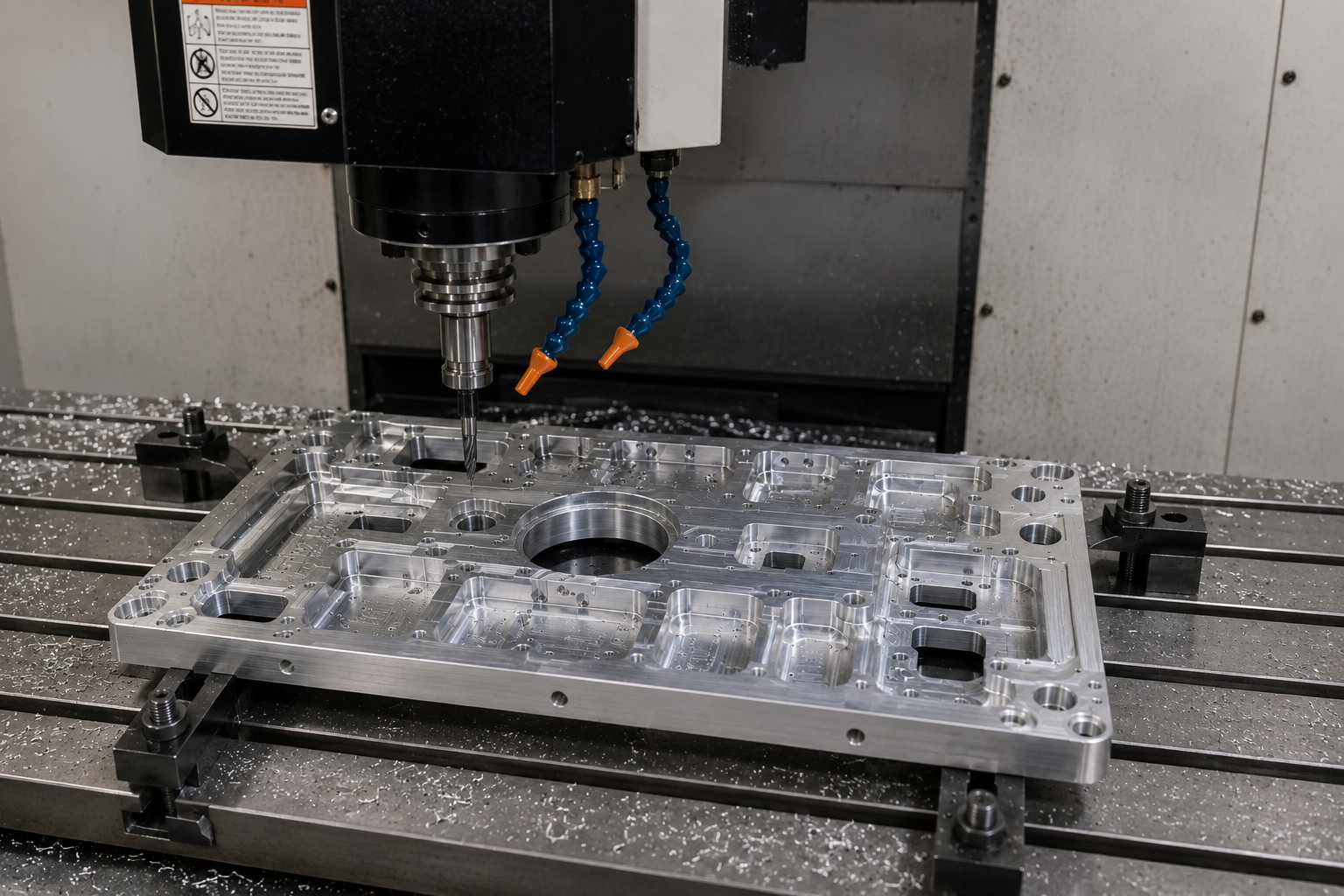
fresado CNC de una placa de montaje de equipos de automatización de precisión
de aluminioLa placa de montaje de aluminio del equipo de automatización mostrada arriba parte de un sólido bloque de aluminio 6061-T6. Aunque la pieza terminada pesa significativamente menos que la pieza original, aproximadamente el 75% del material debe eliminarse durante el mecanizado. Esta alta relación de eliminación de materiales aumenta el tiempo de husillo, el desgaste de la herramienta y el coste total de mecanizado.
Uno de los mayores factores de coste es cuánto material debe eliminarse.
Consideremos dos placas de montaje de aluminio.
Parte A comienza con un bloque de 100 mm × 80 mm × 30 mm y elimina el 40% del material.
La parte B comienza desde el mismo bloque pero elimina el 85% del material.
Aunque las piezas terminadas puedan pesar similar, la Parte B requiere un tiempo de máquina significativamente mayor.
Esto es común en:
Placas
de montaje de equipos de automatización Placas
base de sistemas de visión Accesorios para equipos semiconductores Estructuras
de montaje de máquinas industriales
Cuanto más material se elimine, más tiempo dura el husillo.
Y el tiempo de husillo equivale a dinero.
Factor 3: Part Geometry
La geometría simple es económica.
La geometría compleja aumenta rápidamente el tiempo de mecanizado.
Ejemplos que aumentan el coste incluyen:
Cavidades
profundas Muros
delgados Contornos complejos Características
multicaradas
Radios
internos pequeños Transiciones estrechas en las esquinas
Muchos ingenieros se centran únicamente en la funcionalidad y olvidan la fabricabilidad.
Una pequeña modificación de diseño a veces puede reducir el coste de mecanizado entre un 20 y un 40%.
Factor 4: mecanizado de 3 ejes vs. 5 ejes
Muchos compradores asumen que el mecanizado en 5 ejes es automáticamente más caro.
Eso no siempre es así.
Para piezas simples, el mecanizado de 3 ejes suele ser la opción más económica.
Sin embargo, para componentes complejos de aluminio, el mecanizado de 5 ejes puede reducir el coste total porque elimina múltiples configuraciones.
Consideremos un soporte de brazo robótico que contiene:
Superficies
anguladas Agujeros
multidireccionales Bolsillos complejos
Usar una máquina de 3 ejes puede requerir cuatro o cinco configuraciones.
Una máquina de 5 ejes puede completar la pieza en una sola operación.
La tasa de la máquina es mayor, pero total tiempo de producción puede ser menor.
Factor 5: Tolerancias
Los requisitos de tolerancia influyen mucho en el coste de mecanizado.
Muchos dibujos especifican tolerancias extremadamente estrictas para cada dimensión.
Esto suele generar gastos innecesarios.
Por ejemplo:
| Tolerance | Relativo Impacto en el Coste |
|---|---|
| ±0,1 mm | Bajo |
| ±0,05 mm | Moderado |
| ±0,02 mm | Alto |
| ±0,01 mm | Muy alto |
Aplicar tolerancias estrictas solo cuando la función las requiere.
Los ajustes de rodamientos, la localización de características y los ensamblajes críticos merecen precisión.
Las dimensiones generales normalmente no lo hacen.
Factor 6: Requisitos de acabado superficial
El acabado superficial puede afectar significativamente al coste de mecanizado.
Un acabado mecanizado estándar requiere un procesamiento adicional mínimo.
Sin embargo, requisitos como:
Ra 0.8
Ra 0.4
Ra 0.2
puede requerir operaciones de acabado adicionales.
Del mismo modo, procesos secundarios como:
Recubrimiento
en polvo anodizante
Chorreado
de arena con perlas de arena Anodizado
aumentará total coste de fabricación.
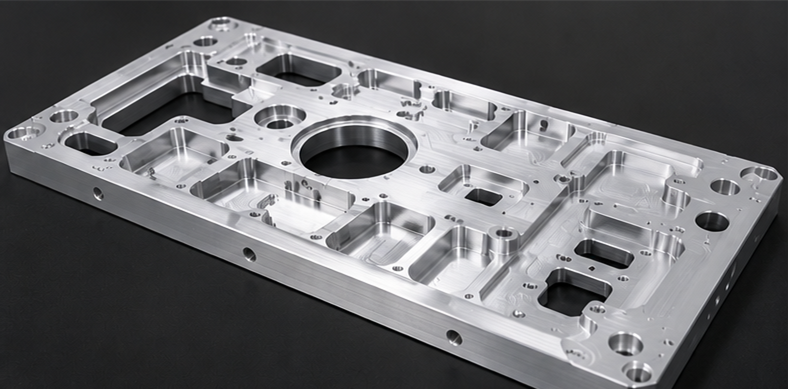
Placa de montaje de aluminio acabado con grandes bolsillos para retirar material
La placa de montaje de equipos de automatización de aluminio terminada que se muestra aquí fue mecanizada a partir de aluminio 6061-T6 y cuenta con múltiples bolsillos de precisión, agujeros de montaje y una alta relación de eliminación de material.
Caso real: Cómo DFM redujo el coste de mecanizado en un 26%
Un cliente Enviar la placa de montaje de aluminio del equipo de automatización que se muestra en este artículo para presupuesto.
El componente estaba mecanizado con aluminio 6061-T6 y presentaba múltiples bolsillos profundos, paredes finas y varias tolerancias innecesariamente ajustadas.
Aunque el diseño cumplía los requisitos funcionales, también aumentó el tiempo de mecanizado, el consumo de herramientas y el coste de fabricación.
Tras una revisión de DFM, se optimizaron varias características no críticas sin afectar al rendimiento del ensamblador ni a la funcionalidad del producto.
Como resultado, el tiempo de mecanizado se redujo aproximadamente un 26%, mejorando la eficiencia general de fabricación y reduciendo el coste de producción.
Diseño inicial:
• Pardes finas: 0,8 mm
• Múltiples esquinas
internas afiladas• Varias tolerancias
innecesarias de ±0,02 mm• Bolsillos profundos para eliminar materiales
Tiempo estimado de mecanizado: 3,8 horas
Tras la revisión de DFM:
• Grosor de la pared aumentado a 1,5 mm
• Esquinas internas cambiadas a R1,5 mm
• Relajación
de tolerancias no críticas• Geometría de bolsillo optimizada para el mecanizado
Tiempo de mecanizado actualizado: 2,7 horas
| Metric | Original | Optimizado |
|---|---|---|
| Tiempo de mecanizado | 3,8 hrs | 2.7 hrs |
| Consumo de herramientas | Alto | Moderado |
| Riesgo de chatarra | Medium | Bajo |
| Total Coste | 100% | 74% |
El cliente logró aproximadamente un 26% de reducción de costes sin cambiar la funcionalidad.
Cómo reducir los costes de fresado CNC
Las estrategias más efectivas incluyen:
Utiliza tipos
estándar de aluminio Evita paredes
demasiado finas Añade
radios
de esquina realistas Reduce tolerancias innecesarias
Diseña para menos montajes Involucra a tu proveedor CNC durante el diseño
Cuanto antes se considere la fabricabilidad, mayor será el ahorro potencial.
Figura 3. Inspección y verificación de calidad
inspección CMM de la placa de montaje de aluminio terminada del equipo de automatización.
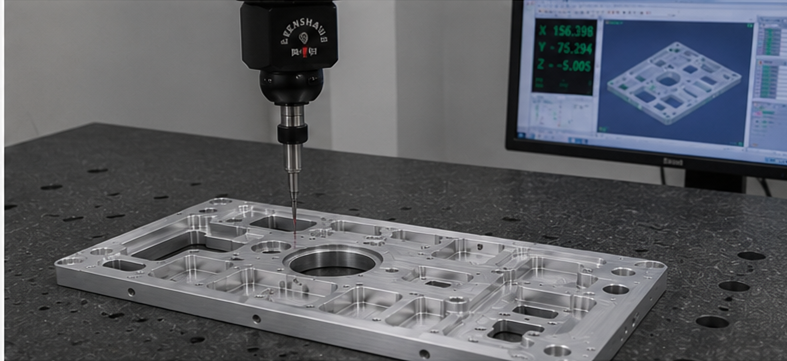
Tras el mecanizado, se verificaron las ubicaciones críticas de los agujeros, profundidades de bolsillo y requisitos de planitud usando una CMM Zeiss para asegurar la precisión dimensional antes del envío.
La inspección de calidad es un paso crítico para componentes de equipos de automatización, donde la precisión y repetibilidad del ensamblaje afectan directamente al rendimiento del equipo.
El informe CMM proporciona una verificación objetiva de que la placa de montaje terminada cumple con las especificaciones de dibujo antes de la entrega al cliente.
¿Listo para reducir tu coste de mecanizado CNC de aluminio?
En Brightstar Prototype CNC Co., Ltd., ayudamos a los clientes a optimizar componentes de aluminio antes de que comience la producción.
Nuestras capacidades incluyen:
3 ejes, 4 ejes y 5 ejes Mecanizado
CNC Componentes
complejos de aluminio y acero inoxidable Tolerancias estrictas de hasta ±0,005 mm
Prototipado rápido en tan solo 3-5 días
Control de calidad completo con inspección
CMM Gratis retroalimentación DFM antes de la producción
Ya sea que desarrolles placas de montaje para equipos de automatización, placas de precisión, componentes de dispositivos médicos o ensamblajes industriales, nuestro equipo de ingeniería puede ayudarte a identificar oportunidades para reducir el coste de mecanizado manteniendo el rendimiento.
Envíanos hoy mismo tu archivo CAD o dibujo y recibe una revisión gratuita de fabricabilidad, sugerencias de optimización de costes y un presupuesto competitivo de nuestro equipo de ingeniería.

FAQ
¿Cuál es el coste medio de fresado CNC de una pieza de aluminio?
El coste varía según el material, la complejidad, las tolerancias, la cantidad y el tiempo de mecanizado. Las piezas prototipo simples pueden costar decenas de dólares, mientras que los componentes complejos de precisión pueden costar cientos.
¿Es el 7075 aluminio más caro que el 6061?
Sí. El 7075 generalmente cuesta más debido al mayor precio del material y a los requisitos de aplicación.
¿El mecanizado de 5 ejes siempre cuesta más?
No. Para piezas complejas, el mecanizado de 5 ejes suele reducir los montajes y disminuir el coste total de fabricación.
¿Qué característica de diseño es la que más cuesta aumentar?
Las cavidades profundas, paredes delgadas, tolerancias ajustadas y geometría compleja de múltiples caras suelen tener el mayor impacto.
¿Puede el DFM reducir el coste de mecanizado CNC?
Absolutamente. Pequeños cambios de diseño suelen reducir los costes de mecanizado entre un 20 y un 40% sin afectar la funcionalidad de las piezas.
¿Por qué dos piezas de aluminio del mismo tamaño tienen diferentes costes de mecanizado?
Porque el coste de mecanizado depende no solo del tamaño de la pieza, sino también del volumen de retirada de material, tolerancias, complejidad geométrica, requisitos de configuración de la máquina y necesidades de inspección.
Aviso legal
La información proporcionada en este artículo es solo para referencia general. Los costes reales de mecanizado CNC dependen de la geometría de la pieza, la selección del material, los requisitos de tolerancia, la cantidad, el acabado superficial y los métodos de producción. Contacto con un proveedor de mecanizado con experiencia para un presupuesto detallado y una revisión de la fabricabilidad.